Sunday, November 1, 2020

Martenson: We Are Pawns In A Bigger Game

Martenson: We Are Pawns In A Bigger Game Than We Realize

Authored by Chris Martenson via PeakProsperity.com,

“I had grasped the significance of the silence of the dog, for one true inference invariably suggests others…. Obviously the midnight visitor was someone whom the dog knew well.”

 ~ Sherlock Holmes – The Adventures of Silver Blaze

Is it possible to make sense out of nonsense?

So much these days is an incoherent mess.  It’s complete nonsense.

Page 1 excitedly beams about a glorious rebound in GDP.  Yay economic growth!

Page 2 worryingly notes the near complete failure of Siberian arctic ice to reform during October and that hurricane Zeta (so many storms this year we’re now into the Greek alphabet!) has made punishing landfall.

Each is a narrative. Each has its own inner logic.

But they simply do not have any external coherence to each other. It’s nonsensical to be excited about rising economic growth while also concerned that each new unit of growth takes the planet further past a critical red line.

These narratives are incompatible. So which one should we pick?

Well, in the end, reality always has the final say. As Guy McPherson states: Nature bats last.

So better we choose to follow the narrative that hews closest to what reality actually is, vs what we desperately want it to be.

‘They’ Don’t Care About Us

While issues like climate change and economic growth may be difficult to fully grasp and unravel, direct threats to our lives &/or livelihoods are much more concrete and something we can react to and resist.

Such immediate and direct threats are now fully in play and, once again, they’re accompanied by narratives that are completely at odds with each other.  I’m speaking of Covid and the ways in which our national and global managers are choosing to respond (or not).

It’s a truly incoherent mess about which both social media and the increasingly irrelevant media are working quite hard to misinform us.

The mainstream narrative about Covid-19, in the West, is this:

  • It’s a quite deadly and novel disease

  • There are no effective treatments

  • Sadly, no double-blind placebo controlled trials exist to support some of the wild claims out there about various off-patent, cheap and widely available supplements and drugs

  • Health authorities care about saving lives

  • They care so much, in fact, that along with politicians they’ve decided to entirely shut down economies

  • There’s a huge second wave rampaging across the US and Europe and there’s nothing we can do to limit it except shut down businesses and people’s ability to travel and gather

  • You need to fear this virus and its associated disease

  • All we can do is wait for a vaccine

The alternative narrative, one that I’ve uncovered after 9 months of almost daily research and reporting, is this:

  • It’s not an especially dangerous disease and it’s certainly not novel

  • There is a huge assortment of very effective, cheap and widely-available preventatives and treatments including (but not limited to)

    • Vitamin D

    • Ivermectin

    • Hydroxychloroquine

    • Zinc

    • Selenium

    • Famotidine (Pepcid)

    • Melatonin

  • Use of a combination of these mostly OTC supplements could reasonably be expected to drop the severity of illness and the already low mortality rate by 90% or (probably) more

  • Western health authorities have shown either zero interest in the results of studies mainly conducted in poorer nations on these combination therapies or…

  • They have actively run studies designed to fail so that these cheap, effective therapies could be dismissed or…

  • Set up proper studies but which started late, have immensely long study periods and most likely won’t be done before a vaccine is hastily rushed through development.

By the way – every single one of my assertions and claims is backed by links and supporting documentation from scientific and clinical trials and studies.  I am not conjecturing here; I am recounting the summary of ten months’ worth of inquiry.

The conclusion I draw from my narrative (vs. theirs) is that we can no longer assume that the public health or saving lives has anything to do with explaining or understanding the actions of these health “managers” (I cannot bring myself to use the word authorities).

After we eliminate the impossible – which is that somehow these massive, well-funded bodies have missed month after month of accumulating evidence in support of ivermectin, hydroxychloroquine, vitamin D, NAC, zinc, selenium and doxycycline/azithromycin – what remains must be the truth.
As improbable as it seems, the only conclusion we’re left with is that the machinery of politics, money and corporate psychopathy is suppressing life saving treatments because these managers have other priorities besides public health and saving lives.

This is a terribly difficult conclusion, because it means suspending so much that we hold dear.  Things like the notion that people are basically good. The idea that the government generally means well. The thought that somehow when the chips are down and a crisis is afoot, good will emerge and triumph over evil.

I’m sorry to say, the exact opposite of all of that has emerged as true.

Medical doctors in the UK NHS system purposely used toxic doses of hydroxychloroquine far too late in the disease cycle to be of any help simply to ‘make a point’ about hydroxychloroquine.  They rather desperately wanted that drug to fail, so they made it fail.

After deliberately setting their trial up for failure, they concluded: “Hydroxychloroquine doesn’t help, and it even makes things worse.”

Note that in order to be able to make this claim, they had to be willing to cause harm — even to let people die.  What kind of health official does that?

Not one who actually has compassion, a heart, or functioning level of sympathy.  It’s an awful conclusion but it’s what remains after we eliminate the impossible.

Getting Past The Emotional Toll

Science has proven that cheap, safe and significantly protective compounds exist to limit both Covid-related death and disease severity.

Yet all of the main so-called health authorities in the major western countries are nearly completely ignoring, if not outright banning, these safe, cheap and effective compounds.

This is crazy-making for independent observers like me (and you) because the data is so clear. It’s irrefutable at this point.  These medicines and treatments not only work, but work really, really well.

However most people will be unable to absorb the data, let alone move beyond it to wrestle with the implications.  Why? Because such data is belief-shattering.  Absorbing this information is not an intellectual process; it’s an emotional one.

I don’t know why human nature decided to invest so much in developing a tight wall around the belief systems that control our actions and thoughts. But it has.

I’m sure there was some powerful evolutionary advantage. One that’s now being hijacked daily by social media AI programs to nudge us in desired directions. One that’s being leveraged by shabby politicians, hucksters, fake gurus, and con men to steer advantage away from the populace and towards themselves.

The neural wiring of beliefs is what it is. We have to recognize that and move on.

Some people will be much faster in their adjustment process than others.  (Notably, the Peak Prosperity tribe is populated with many fast-adjusters, which is unsurprising given the topics we cover…tough topics tend to attract fast adjusters and repel the rest)

To move past the deeply troubling information laid out before us requires us to be willing to endure a bit of turbulence.  It’s the only way.

For you to navigate these troubling times safely and successfully, you’ll need to see as clearly as possible the true nature of the game actually being played.  To see what the rules really are – not what you’ve been told they are, or what you wish or hope they are.

The Manipulation Underway

The data above strongly supports the conclusion that our national health managers don’t actually care about public health generally or your health specifically.

If indeed true, then the beliefs preventing most people from accepting this likely include:

  • Wanting to believe that people are good (a biggie for most people)

  • Trust and faith in the medical system (really big)

  • Faith in authority (ginormous)

There are many other operative belief systems I could also list. But this is sufficient to get the ball rolling.

Picking just one, how hard would it be for someone to let go of, say, trust in the medical system?

That would be pretty hard in most cases.

First not trusting the medical system might mean having to wonder if a loved one might have died unnecessarily while being treated.  Or realizing that you’re now going to have to research the living daylights out of every medical decision before agreeing to it.  Or worrying that your medications might be more harmful to you over the long haul than helpful (which is true in many more cases than most appreciate).  It might mean having your personal heroes dinged by suspicion — perhaps even your father or mother who worked in the medical profession.  It would definitely require a complete reorientation away from being able to trust anything you read in a newspaper, or see on TV, about new pharmaceutical “breakthroughs”.

Trust, which is safe and warm and comforting, then turns into skepticism; which is lonelier and insists upon active mental involvement.

But, as always, hard work comes with benefits — with a healthy level of skepticism and involvement, the families of those recruited into the deadly UK RECOVERY trial could have looked at the proposed doses of HCQ (2,400 mg on day one! Toxic!) and said, “Not now, not ever!” and maybe have saved the life of their loved one.

Look at that tangled mess of undesirables that comes with unpacking that one belief: regret, uncertainty, shame, doubt, fallen idols, and vastly more additional effort. Are all up for grabs when we decide to look carefully at the actions of our national health managers during Covid.

Which is why most people simply choose not to look.  It’s too hard.

I get it. I have a lot of compassion for why people choose not to go down that path.  It can get unpleasant in a hurry.

But, just like choosing to ignore a nagging chest pain, turning away in denial has its own consequences.

The Coming ‘Great Reset’

My coverage of SARS-CoV-2 (the virus) and Covid-19 (the associated disease) has led me to uncover some things that have made me deeply uncomfortable about our global and national ‘managers’.  Shameful things, really.  Scary things in their implications for what we might reasonably expect (or not expect, more accurately) from the future.

Once we get past the shock of seeing just how patently corrupt they’ve been, we have to ask both What’s next? and What should I do?

After all, you live in a system whose managers either are too dumb to understand the Vitamin D data (very unlikely) or have decided that they’d rather not promote it to the general populace for some reason.  It’s a ridiculously safe vitamin with almost zero downside and virtually unlimited upside.

Either they’re colossally dumb, or this is a calculated decision.  They’re not dumb.  So we have to ask: What’s the calculation being performed here?  It’s not public safety. It’s not your personal health. So… What is it?

This is our line of questioning and observation. It’s like the short story by Arthur Conan Doyle in Silver Blaze that many of us informally know as “the case of the dog that didn’t bark”.  As the story goes, because of a missing clue – a dog who remained silent as a murder was committed – this conclusion could be drawn: the dog was already familiar with the killer!

The silence around Vitamin D alone is extremely telling. It is the pharmacological dog that did not bark.

One true inference suggests others.  Here, too, we can deduce from the near total silence around Vitamin D that the health managers would prefer not to talk about it. They don’t want people to know. That much is painfully clear.

Such lack of promotion (let alone appropriate study) of safe, effective treatments is a thread that, if tugged, can unravel the whole rug.  The silence tells us everything we need to know.

Do they want people to suffer and die?  I don’t know. My belief systems certainly hope not. Perhaps the death and suffering are merely collateral damage as they pursue a different goal — money, power, politics?  Simply the depressing result of a contentious election year?  More than that?

We’ve now reached the jumping off point where we may well find out just how far down the rabbit hole goes.

A massive grab for tighter control over the global populace is now being fast-tracked at the highest levels. Have you heard of the Great Reset yet?

If not, you soon will.

In Part 2: The Coming ‘Great Reset’ we lay out everything we know so far about the multinational proposal to transform nearly every aspect of global industry, commerce, trade, and social structure.

If you read on, be ready and willing to let go of cherished beliefs and to suspend what you know to be true. Because none of us has that in hand.  It’s going to be a wild ride from here.

Something very big is afoot and I suspect that Covid-19 is merely an excuse providing cover for a much bigger power grab over the world’s wealth and peoples.

Click here to read Part 2 of this report (free executive summary, enrollment required for full access).


Tuesday, September 22, 2020

On the origins of chess

On the origins of chess (7/7)

by Sergio Ernesto Negri
9/22/2020 – 
 
In the last instalment of a seven-part series, Sergio Negri presents a list of the knowns and unknowns regarding the origins of chess. The Argentine researcher concludes, “For now, it might be better not to know everything yet. [...] A suggestive and primordial mystery continues to haunt us: when did the magical and millenary game of chess appeared on Earth”. | 
 
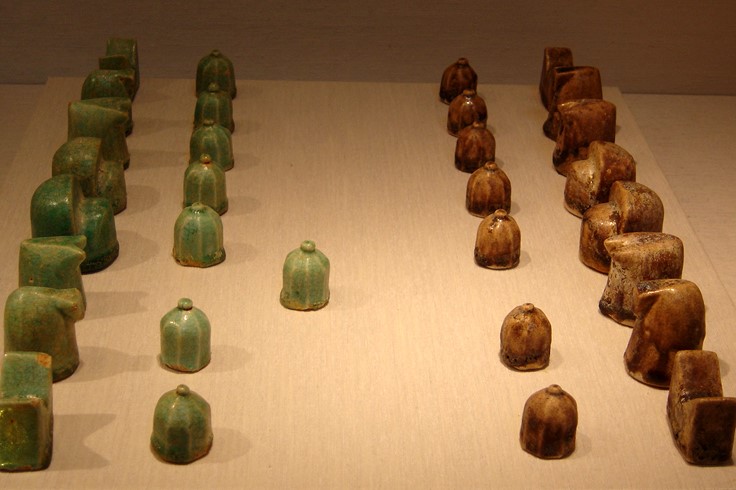
Pictured: Chess Set (Shatranj in Iranian), glazed fritware, 12th century. New York Metropolitan Museum of Art.

ChessBase 15 - Mega package ChessBase 15 - Mega package

Find the right combination! ChessBase 15 program + new Mega Database 2020 with 8 million games and more than 80,000 master analyses. Plus ChessBase Magazine (DVD + magazine) and CB Premium membership for 1 year!

More...

1: Introduction | 2: India | 3: China | 4: Egypt | 5: Myths, legends | 6: Cultural syncretism

Part 7: Epilogue

At this point of the investigations on the origin of chess there are things we know, things we suppose we know and things that we ignore. Let’s list them one by one:

We know that the game arose in the Orient.

We know that there are only three theories that present valid sources to support their stance on the original source of the game: the one that locates the origin in India; the one that focuses on China, and that of cultural syncretism.

We know that a variant of proto-chess entered Persia in the sixth century AD coming from a region of India.

We suppose that this game was chaturanga, in its two-player modality, which was taken to present-day Baghdad, the capital of the Persian Empire.

We know that the first precise mentions to a variant of proto-chess, coming from diverse literary sources, appear in the fourth century AD, the first of which refers to the Chinese xiang-qi and the second one to chaturanga.

We know that both xiang-qi and chaturanga had their respective transformation processes.

We know that there are two previous games that were born in these cultures, which had been recorded in literary works since ancient times: the Chinese liubo and the Indian ashtāpada.

We suppose that xiang-qi — if it came exclusively from the Chinese culture — could have been conceived from liubo.

We suppose that chaturanga — if it came exclusively from the Indian culture — could have been conceived from ashtāpada or chaturaji.

We ignore the sequence in which chaturaji and chaturanga came to be (although the predominant theory is that the latter came first), or even if chaturaji is a mere position of chaturanga.

We know that a version of xiang-qi has survived to the present day (it is currently played in China and, at least, also in Vietnam) while chaturanga disappeared as a practice at some distant moment in time.

We ignore under which precise circumstances chaturanga abandoned the use of dice.

We ignore whether the evolutionary process of chaturanga went from the four-player version to the two-player one or the other way around.

We suppose that a synthesis of several previous games was generated on the Silk Route, appearing a new prototype that later turned into chess.

We ignore if, at the end of that process, only one game arose or, if on the contrary, both chaturanga and xiang-qi appeared simultaneously.

We suppose that the games that were part of the process of cultural syncretism were liubo, ashtāpada and the Greek petteia, and possibly the process took place under the influence of an old astrolabe of Babylonian origin.

We suppose that this symbiosis occurred in a period of time between the second century BC and the third century AD.

We suppose that the process took place in a vast region occupied successively by the Kingdom of Bactria and the Kushán Empire

We know that the oldest archaeological findings of pieces that were used in some variant of proto-chess — which correlate perfectly with the geographical zones linked to the Silk Route — existed approximately in the sixth century AD.

We suppose that in the future other important archaeological elements will be discovered that, depending on their location, characteristics and antiquity, will strengthen our knowledge regarding this matter.

We know that it is necessary to deepen the analysis with regard to the theory of games, establishing greater precision and causal relationships between the various variants of proto-chess and linked practices — namely ashtāpada, chaturanga, chaturaji, liubo, xiang-qi, petteia and others.

We know that there is much yet to be investigated on the origin of chess.

We suppose that we will eventually find an answer that, without becoming an absolute certainty, at least will allow us to find a major consensus, thus establishing a uniform explanatory paradigm on the origin of chess.

Liubo

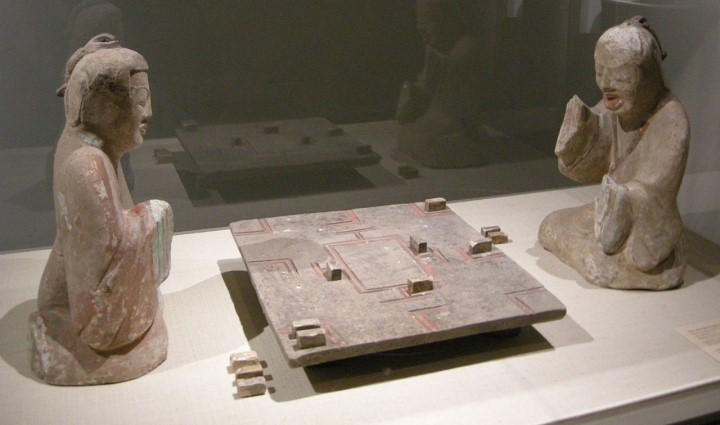
Statuettes probably from the first to the second century of the Christian era representing two players disputing a game of liubo. | Photo: Wikimedia Commons

Epilogue

Chess might be the product of a cooperative process — and we would prefer it to be this way, to show that Humanity has the capacity to be virtuous at times (although it is known that it usually favours quarrels, often bloody, between people who seem to forget that they come from a common origin). The game could also have been an invention/creation/discovery of a single culture. Anyway, there is only one thing that is entirely certain: as Borges correctly pointed out, chess comes from the East. 

In that sense, we have presented the different protohistoric versions regarding the origins of the game, focusing on that geographical space (India, China, Persia and other undetermined spots within the Silk Road), with physical or literary records that refer to a few centuries before and after the arrival of Christ.

There are quite exact records of many specific episodes, such as the time when one of the versions of the game entered Ctesifonte from India, which happened exactly in the sixth century AD. From that moment on, everything is quite clear, in terms of the diffusion of chess; before this event, however, everything is much less clear.

In this context of uncertainty, there are conflicting theses on the origin of chess, some of which have empirical support while others can only be recognized as myths or legends. All of them, with the inevitable omissions born out of the vastness of the analytical field, were compiled in this work. 

After all, there are mainly three possibilities with a high degree of truthfulness and verisimilitude: two of them correspond to particular cultures — those that consider that chess comes from the Indian chaturanga or the Chinese xiang-qi; the third possibility, on the other hand, recognizes the existence of a syncretic civilizing effort, postulating a confluence of practices from different civilizations.

Beyond the validity of this trio of hypotheses, which are often each seen as independent efforts, we believe that an effort can be made to integrate the perspectives. 

All the theories present elements that can be interconnected, in their complementarity, leaving aside, or perhaps reinterpreting, the divergences between them. The fact that the different variants of proto-chess have emerged in a wide but interconnected geographical space, and that this has happened in temporal synchrony, gives strong clues to a fact that we believe is incontrovertible: we are in the presence of a single family of games, with interconnected processes of evolution, which have yet to be fully discerned.

By extending the analysis, it would be possible to trace not only the interrelationship of the various proto-chess variants but also their origins in even older games. We could even go back to the Egyptian senet and, reconstructing the sequence from there on, arrive at chess as it was redefined in medieval Europe. 

Under these conditions, it would be possible to work no longer from univocal, fragmented perspectives, but rather by proposing a holistic theory, integrating the evidence of each singular hypothesis, in such a way as to construct a unique, all-encompassing explanation.

Thus, instead of giving pre-eminence to chaturanga or xiang-qi an initial prototypes, it could be believed that at least one game appeared on the Silk Road from which these were derived, either concomitantly or sequentially. Therefore, in that case, the former would not derive from ashtāpada and the latter from liubo — rather, these earlier games, probably together with the Greek petteia and with the contribution of an ancient Babylonian astrolabe, produced a variant of proto-chess via cultural syncretism. This game, from then on, would expand through different routes, to the East and to the West.

So there are very interesting lines of exploration still to be developed. Although the possibility of testimonials appearing from ancient manuscripts on the subject is increasingly remote (although not entirely impossible), there could appear new archaeological findings that provide new clues, particularly in regard to the dating of games’ vestiges, which could better establish interrelationships and sequential information about these practices. 

It is also possible, and indeed necessary, to continue to deepen structural analyses, based on the intrinsic characteristics and aetiology of the various games, in order to determine more precisely their correlation according to historical, geographical and cultural variables. This question is central to the design of the common evolutionary tree discussed above. 

In any case, it is necessary to deepen the understanding of the practices that would have served as inputs of the proto-chess — petteia, liubo, ashtāpada — so that it will be possible to evaluate with more certainty, from the study of their particularities, the degree in which they could have had an effect in the subsequent modalities: xiang-qi and chaturanga.

Senet

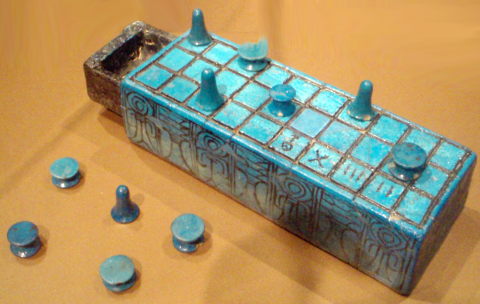
A ‘senet’ board that may correspond to the 14th century B.C.

In short, where did chess originate and under what circumstances? 

We could simply reproduce some well-known legendary stories, such as the ones that attribute the invention of the game to Sissa the Wise or the queen of Lanka — or even to the battle in which a sovereign lost one of her sons in confrontation with his brother. 

We could focus on divinities, on the esoteric world or on fictional literature. 

We could, without analysing the whole, but observing only the parts, attribute the creation of the game to Indians, Chinese or other culture.

We could say, so as not to be mistaken, although falling into an obvious imprecision — which we can only admit in poetry — that chess appeared at a distant moment in time somewhere in the East. 

What I said at the beginning. The restless Humanity wants to know everything. We will never be satisfied with simple and insufficient explanations; and less so with inaccurate ones.

A holistic theory about the origin of chess can perhaps help explain the steps that were taken for the emergence of the most influential and metaphorical game ever conceived.

In any case, we believe we are closer to discovering the key that will allow us to determine the initiating moment when the game appeared. And, from that, determine with much greater certainty how the whole sequence of subsequent diffusion took place. 

For now, it might be better not to know everything yet. 

Thus, there is a powerful incentive to further research this topic.

In this way, a suggestive and primordial mystery continues to haunt us: when did the magical and millenary game of chess appeared on Earth.


The ‘Origins of chess’ series


Sunday, September 6, 2020

Saturday, September 5, 2020

Englund Gambit: Harshavardhan v. Moskalenko, 1/2, 2020.08.25


[Event "Titled Tue 25th Aug"]
[Site "https://lichess.org/40SaQnoA"]
[Date "2020.08.25"]
[Round "8"]
[White "Harshavardhan,G B (2397)"]
[Black "Moskalenko,A (2515)"]
[Result "1/2-1/2"]
[WhiteElo "?"]
[BlackElo "?"]
[Variant "Standard"]
[TimeControl "-"]
[ECO "A40"]
[Opening "Queen's Pawn Game: Englund Gambit"]
[Termination "Normal"]
[Annotator "lichess.org"]

1. d4 e5 2. dxe5 Nc6 3. Nf3 Qe7 4. Qd5 f6 5. exf6 Nxf6 { A40 Queen's Pawn Game: Englund Gambit } 6. Qd1 d5 7. Nc3 Be6 8. e3 O-O-O 9. Bb5 Qc5 10. Nd4 Bg4 11. f3 Bd7 12. Nxc6 Bxc6 13. Qd4 Bxb5 14. Qxc5 Bxc5 15. Nxb5 Rde8 16. O-O Bxe3+ 17. Bxe3 Rxe3 18. Nxa7+ Kd7 19. Nb5 c5 20. Rfe1 Rhe8 21. Rxe3 Rxe3 22. Kf2 d4 23. b4 cxb4 24. Nxd4 Ra3 25. Nb3 Nd5 26. Ke2 Nf4+ 27. Kd2 Nxg2 28. Rg1 Nh4 29. Rxg7+ Kc8 30. Rxh7 Nxf3+ 31. Ke3 Ne5 32. Kd4 Nc6+ 33. Kc5 Rxa2 34. Kd6 Kb8 35. Nc5 Na5 36. Nb3 Nc4+ 37. Kc5 Rxc2 38. Kxb4 Ne5 39. h4 Ka7 40. Nc5 Nc6+ 41. Kb5 Nd4+ 42. Kb4 Nc6+ 43. Kb5 Rb2+ 44. Kc4 Kb8 45. h5 Rc2+ 46. Kd5 Rd2+ 47. Ke4 Rd4+ 48. Ke3 Rh4 49. Rxb7+ Kc8 50. Rh7 Ne5 51. Ne4 Kd8 52. Nf6 Ng4+ 53. Nxg4 Rxg4 54. Kf3 Rh4 55. Kg3 Rh1 56. Kg4 Ke8 57. Kg5 Rg1+ 58. Kh6 Kf8 59. Ra7 Kg8 60. Ra8+ Kf7 61. Kh7 Rh1 62. h6 Rg1 63. Ra7+ Kf8 64. Rg7 Rh1 65. Rg2 Rf1 66. Re2 Rg1 67. Rf2+ Ke7 68. Rf5 Rg2 69. Ra5 Kf7 70. Ra7+ Kf8 71. Rg7 Rh2 72. Rg5 Rf2 73. Kh8 Rf1 74. Rg7 Rh1 75. Kh7 Rh2 76. Ra7 Rg2 77. Ra6 Kf7 78. Ra5 Rg1 79. Ra3 Kf8 80. Rf3+ Ke7 81. Kh8 Ke8 82. h7 Ke7 83. Ra3 Kf7 84. Ra8 Rg2 85. Rg8 Ra2 86. Rg7+ Kf8 87. Rg3 Rf2 88. Rg4 Rf1 89. Rg8+ Kf7 90. Rg7+ Kf8 91. Rg5 Rf2 92. Rg3 Rf1 93. Rg2 Rf3 94. Re2 Rg3 95. Ra2 Kf7 96. Ra7+ Kf8 97. Rb7 Rg1 98. Rb8+ Kf7 99. Rg8 Rh1 100. Rg3 Rf1 101. Rh3 Kf8 102. Rh2 Rf3 103. Rb2 Rf1 104. Rb8+ Kf7 105. Rb7+ Kf8 106. Rg7 Rh1 107. Rg4 Rf1 108. Rg3 Rf2 109. Rc3 Rf1 110. Rc8+ Kf7 111. Rg8 Rf2 112. Rg3 Rf1 113. Rg2 Rf3 114. Ra2 Kf8 115. Ra7 Rg3 116. Ra8+ Kf7 117. Ra7+ Kf8 { The game is a draw. } 1/2-1/2

Englund Gambit, Matta v. Efremova 0-1 , 2020.08.25


[Event "Titled Tue 25th Aug"]
[Site "https://lichess.org/lBRFdInO"]
[Date "2020.08.25"]
[Round "6"]
[White "Matta,Nicholas (2177)"]
[Black "Efremova,Y (2128)"]
[Result "0-1"]
[WhiteElo "?"]
[BlackElo "?"]
[Variant "Standard"]
[TimeControl "-"]
[ECO "A40"]
[Opening "Englund Gambit Complex: Englund Gambit"]
[Termination "Normal"]
[Annotator "lichess.org"]

1. d4 e5 2. dxe5 Nc6 3. Nf3 Qe7 { A40 Englund Gambit Complex: Englund Gambit } 4. Bf4 Qb4+ 5. Bd2 Qxb2 6. Nc3 Bb4 7. Rb1 Qa3 8. Nd5 Bxd2+ 9. Qxd2 Kd8 10. Qg5+ Nge7 11. Qxg7 Rg8 12. Qxf7 Qa5+ 13. c3 Qxd5 14. Qxh7 Nxe5 15. Rd1 Nxf3+ 16. exf3 Qe5+ 17. Be2 Qxc3+ 18. Kf1 Qg7 19. Qxg7 Rxg7 20. h4 d6 21. g4 Be6 22. h5 Bxa2 23. h6 Rg8 24. h7 Rh8 25. f4 Kd7 26. Bd3 Raf8 27. f5 Rf7 28. f6 Rxf6 29. g5 Re6 30. f4 Bd5 31. Rg1 Be4 32. g6 Bxd3+ 33. Rxd3 Rxg6 34. Rh1 Rg7 35. Rdh3 Rf7 36. Rh4 Ng6 37. Rh6 Nxf4 38. Ke1 { White resigns. } 0-1


Hartlaub-Charlick Gambit: Yordanov v. Milovic, 1-0, 2020.05.30


[Event "Euro Online +2300 Day 2"]
[Site "https://lichess.org/44rL2yKb"]
[Date "2020.05.30"]
[Round "2"]
[White "Yordanov,Lachezar (2307)"]
[Black "Milovic,J (2256)"]
[Result "1-0"]
[WhiteElo "2307"]
[BlackElo "2256"]

[Variant "Standard"]
[TimeControl "-"]
[ECO "A40"]
[Opening "Englund Gambit Complex: Hartlaub-Charlick Gambit"]
[Termination "Normal"]
[Annotator "lichess.org"]

1. d4 { [%eval 0.0] } 1... e5?? { (0.00 → 1.57) Blunder. Nf6 was best. } { [%eval 1.57] } (1... Nf6 2. c4 e6 3. Nf3 d5 4. cxd5 exd5 5. Bf4 c6 6. Nc3) 2. dxe5 { [%eval 0.79] } 2... d6 { [%eval 1.4] } { A40 Englund Gambit Complex: Hartlaub-Charlick Gambit } 3. Nf3 { [%eval 1.27] } 3... Bg4 { [%eval 1.63] } 4. exd6 { [%eval 1.16] } 4... Bxd6 { [%eval 1.39] } 5. Qd4 { [%eval 1.22] } 5... Nf6 { [%eval 1.09] } 6. Bg5 { [%eval 1.23] } 6... Nc6 { [%eval 1.19] } 7. Qe3+?! { (1.19 → 0.36) Inaccuracy. Qxg4 was best. } { [%eval 0.36] } (7. Qxg4 Nxg4 8. Bxd8 Rxd8 9. e3 Nb4 10. Na3 c6 11. Be2 O-O 12. c3 Nd3+ 13. Bxd3 Bxa3) 7... Be6 { [%eval 0.3] } 8. Nc3 { [%eval -0.16] } 8... Qe7?! { (-0.16 → 0.60) Inaccuracy. h6 was best. } { [%eval 0.6] } (8... h6 9. Bxf6 Qxf6 10. g3 O-O-O 11. O-O-O Qf5 12. Qe4 Qa5 13. Qa4 Qxa4 14. Nxa4 Bxa2 15. Bh3+) 9. O-O-O { [%eval 0.29] } 9... O-O-O { [%eval 0.61] } 10. Ne4 { [%eval 0.21] } 10... Rhe8? { (0.21 → 1.33) Mistake. Bb4 was best. } { [%eval 1.33] } (10... Bb4 11. Nd4 Nxd4 12. Rxd4 Ba5 13. Rd3 Qb4 14. Nc3 Rxd3 15. exd3 Bb6 16. Qd2 Rd8 17. Be3) 11. Nxd6+?! { (1.33 → 0.58) Inaccuracy. a3 was best. } { [%eval 0.58] } (11. a3 h6 12. Bxf6 gxf6 13. g3 Be5 14. Rxd8+ Qxd8 15. Qc5 Qd5 16. Qxd5 Bxd5 17. Ned2 Nd4) 11... Rxd6 { [%eval 0.5] } 12. Rxd6 { [%eval 0.0] } 12... Qxd6 { [%eval 0.0] } 13. Bxf6 { [%eval 0.0] } 13... gxf6 { [%eval 0.0] } 14. Qd2 { [%eval 0.0] } 14... Qc5 { [%eval 0.0] } 15. e3 { [%eval 0.0] } 15... Bxa2 { [%eval 0.1] } 16. Bd3 { [%eval -0.33] } 16... Be6 { [%eval -0.19] } 17. Qc3 { [%eval -0.29] } 17... Qxc3 { [%eval -0.19] } 18. bxc3 { [%eval 0.1] } 18... Ne5? { (0.10 → 1.21) Mistake. h6 was best. } { [%eval 1.21] } (18... h6 19. Kb2) 19. Nd4? { (1.21 → -0.30) Mistake. Nxe5 was best. } { [%eval -0.3] } (19. Nxe5 fxe5 20. Bxh7 Rh8 21. Bd3 f5 22. h4 e4 23. Be2 Kd7 24. Kb2 Kd6 25. h5 Rh6) 19... c5 { [%eval -0.1] } 20. Nb5 { [%eval -0.52] } 20... Rd8 { [%eval -0.65] } 21. Nxa7+ { [%eval -0.81] } 21... Kb8?! { (-0.81 → 0.00) Inaccuracy. Kc7 was best. } { [%eval 0.0] } (21... Kc7 22. Nb5+ Kb6 23. Na3 Nxd3+ 24. cxd3 Rxd3 25. Nb1 Bb3 26. Kb2 Ba4 27. e4 Kc6 28. Re1) 22. Nb5 { [%eval 0.0] } 22... Nxd3+ { [%eval 0.0] } 23. cxd3 { [%eval 0.0] } 23... Rxd3 { [%eval 0.0] } 24. Rd1 { [%eval 0.0] } 24... Rxd1+ { [%eval 0.1] } 25. Kxd1 { [%eval 0.61] } 25... Kc8?! { (0.61 → 1.38) Inaccuracy. Bd7 was best. } { [%eval 1.38] } (25... Bd7 26. Nd6) 26. Nd6+ { [%eval 1.26] } 26... Kc7 { [%eval 1.36] } 27. Ne8+ { [%eval 1.28] } 27... Kc6? { (1.28 → 2.81) Mistake. Kd8 was best. } { [%eval 2.81] } (27... Kd8 28. Nxf6) 28. Nxf6 { [%eval 2.72] } 28... h6 { [%eval 2.89] } 29. h4? { (2.89 → 1.43) Mistake. g4 was best. } { [%eval 1.43] } (29. g4 Kd6 30. f4 Bd7 31. e4 b5 32. e5+ Ke7 33. f5 b4 34. Ng8+ Kf8 35. Nxh6 Ba4+) 29... b5? { (1.43 → 3.00) Mistake. Kd6 was best. } { [%eval 3.0] } (29... Kd6 30. g4) 30. g4 { [%eval 2.62] } 30... b4? { (2.62 → 4.51) Mistake. Kd6 was best. } { [%eval 4.51] } (30... Kd6 31. f4) 31. cxb4 { [%eval 4.34] } 31... cxb4 { [%eval 4.27] } 32. g5 { [%eval 4.2] } 32... hxg5 { [%eval 3.97] } 33. h5 { [%eval 3.65] } 33... b3?? { (3.65 → 10.98) Blunder. Kd6 was best. } { [%eval 10.98] } (33... Kd6 34. h6) 34. e4 { [%eval 9.45] } 34... Kc5 { [%eval 11.06] } 35. Kc1 { [%eval 11.15] } 35... Kd4 { [%eval 14.0] } 36. h6 { [%eval 10.32] } 36... Kc3 { [%eval 23.2] } 37. Nd5+ { [%eval 18.03] } 37... Kd4 { [%eval 60.87] } 38. h7 { [%eval 17.1] } 38... Kxe4 { [%eval 17.14] } 39. Nc3+ { [%eval 14.47] } { Black resigns. } 1-0

Stockfish 12 Released, 130 Elo Points Stronger

Stockfish 12 Released, 130 Elo Points Stronger

Stockfish 12 Released, 130 Elo Points Stronger

PeterDoggers
PeterDoggers
|
Source: https://www.chess.com/news/view/stockfish-12-released-130-elo-points-stronger


Version 12 of the popular open-source chess engine Stockfish was released on Thursday. It is a major update that includes an efficiently updatable neural network and is significantly stronger than earlier versions.
According to the official Stockfish blog, version 12 of Stockfish plays significantly stronger than any of its predecessors: "In a match against Stockfish 11, Stockfish 12 will typically win at least 10 times more game pairs than it loses."

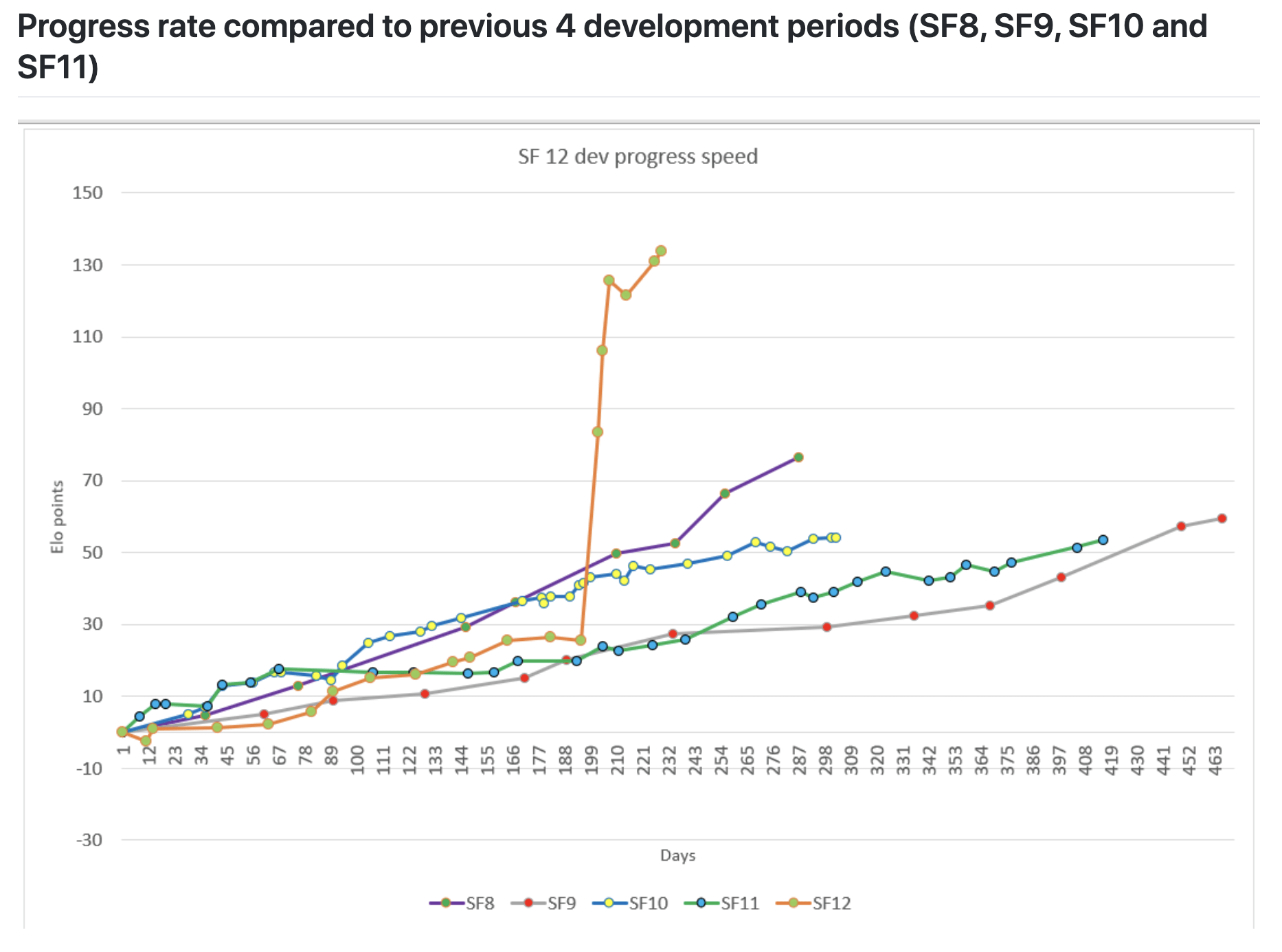
The rating difference compared to Stockfish 11 is estimated to be about 130 Elo points. This became clear from internal progression tests during development and was recently confirmed In Chess.com's computer chess environment where Stockfish+NNUE and Leela Chess Zero performed quite comparably.
Stockfish 12 progress rate
Image: Gary Linscott/Github.
The jump in strength is mainly the result of the introduction of NNUE, which stands for "efficiently updatable neural network." At the same time, Stockfish remains a CPU-only engine.
Stockfish 12 combines the brute-force computing approach of traditional Stockfish with the advanced evaluation capabilities of neural network chess engines such as AlphaZero and Leela Chess Zero.
In the new version, two evaluation functions are available. Besides the classical evaluation function, there is now the NNUE evaluation which is computed with a neural network based on basic inputs. The network is optimized and trained on the evaluations of millions of positions.
Wotawa, 1937
German Chess Magazine #1979
White to Move
 
This study is known to be a tough nut to crack for chess engines. On this author's computer, Stockfish 11 took 4 minutes and 54 seconds to show the winning move as its first choice. Stockfish 12 took only 38 seconds.

One early user wrote on Reddit: "From personal experience, Stockfish 12’s positional understanding is really unlike anything before it. Even Leela on extremely powerful hardware can seem blind to Stockfish 12’s search. Pretty much every major blindspot, like pawn structure weaknesses, seems gone in this new evaluation."

Stockfish 12 is available for download here with the neural network already embedded and ready to go. Chess.com expects to soon have Stockfish 12 available in our "max analysis" feature.

See also:

Friday, September 4, 2020

Englund Gambit Complex: Hartlaub-Charlick Gambit

[Event "Monthly Rapid Arena"]
[Site "https://lichess.org/DmP4bcSE"]
[Date "2020.09.03"]
[White "Kung_Fu_Panda3"]
[Black "MoneyDoctor"]
[Result "0-1"]
[UTCDate "2020.09.03"]
[UTCTime "18:15:25"]
[WhiteElo "2433"]
[BlackElo "2018"]

[WhiteRatingDiff "-10"]
[BlackRatingDiff "+11"]
[Variant "Standard"]
[TimeControl "600+0"]
[ECO "A40"]
[Opening "Englund Gambit Complex: Hartlaub-Charlick Gambit"]
[Termination "Normal"]
[Annotator "lichess.org"]

1. d4 e5?? { (0.00 → 1.57) Blunder. Nf6 was best. } (1... Nf6 2. c4 e6 3. Nf3 d5 4. cxd5 exd5 5. Bf4 c6 6. Nc3) 2. dxe5 d6 { A40 Englund Gambit Complex: Hartlaub-Charlick Gambit } 3. Nf3 Bg4 4. Qd4 Qd7 5. Nc3?! { (1.27 → 0.69) Inaccuracy. exd6 was best. } (5. exd6 Nc6 6. Qe3+ Be6 7. dxc7 Nf6 8. Nc3 Qxc7 9. a3 Rd8 10. Qg5 Ng4 11. h3 Be7) 5... Nc6 6. Qe4 Bxf3 7. exf3 dxe5 8. Bb5 Nge7?! { (0.56 → 1.27) Inaccuracy. Bd6 was best. } (8... Bd6 9. Bxc6 Qxc6 10. Qxc6+ bxc6 11. Ne4 f5 12. Nd2 Nf6 13. Nc4 e4 14. fxe4 Nxe4 15. f3) 9. Be3 a6 10. Rd1 Qxd1+?? { (1.51 → 4.91) Blunder. Qe6 was best. } (10... Qe6 11. Ba4) 11. Kxd1 axb5 12. Nxb5 O-O-O+ 13. Ke2 f5 14. Qa4 f4?! { (4.52 → 6.90) Inaccuracy. Kb8 was best. } (14... Kb8) 15. Bc5? { (6.90 → 4.13) Mistake. Qa8+ was best. } (15. Qa8+ Kd7 16. Qxb7 fxe3 17. fxe3 g5 18. Rd1+ Ke6 19. Nxc7+ Kf6 20. Nd5+ Nxd5 21. Qxc6+ Rd6) 15... Nd5 16. Qa8+ Kd7 17. Qxb7?? { (4.21 → 0.85) Blunder. Qa3 was best. } (17. Qa3 Kc8 18. Bxf8 Rhxf8 19. Rd1 Nb6 20. Rxd8+ Rxd8 21. Na7+ Nxa7 22. Qxa7 Rd6 23. Qa3 Kb8) 17... Bxc5? { (0.85 → 2.35) Mistake. Rb8 was best. } (17... Rb8 18. Qa6) 18. Rd1 Bd4 19. Na7?? { (2.12 → -1.42) Blunder. Nxd4 was best. } (19. Nxd4) 19... Nce7 20. Qb5+ Ke6 21. Nc6 Nxc6 22. Qxc6+ Rd6 23. Qc4?! { (-1.34 → -2.45) Inaccuracy. Qb5 was best. } (23. Qb5 Rhd8 24. c4 Ne7 25. Qb3 Ra6 26. a4 Rda8 27. Qc2 Rxa4 28. Rxd4 exd4 29. Qe4+ Kf7) 23... Rb8 24. Rxd4 exd4 25. Qxd4?! { (-3.06 → -3.93) Inaccuracy. b3 was best. } (25. b3 Re8) 25... Rb4?? { (-3.93 → -0.44) Blunder. Kf7 was best. } (25... Kf7) 26. Qxg7 Nf6 27. b3?? { (-0.14 → -14.63) Blunder. Qxc7 was best. } (27. Qxc7) 27... Rbd4 28. g3 Rd1 { White resigns. } 0-1

Saturday, August 15, 2020

How to defeat online chess cheating - once and for all

How to defeat online chess cheating - once and for all
by Marco Saba, August 15, 2020 (Italian translation below the text)

To understand this document you must be well versed in chess, psychology and intelligence. And you must know an online chess system, like lichess.org pictured above.
   Online chess games are fun and allow you to keep track of your own ELO score in the various types of game: classic, blitz, fast, or game variants like the one invented by Fischer and others. The unpleasant thing is that, since the inscription involves using a name as an alias, as it happens that someone cheats, it is expelled, but then reincarnated under a different alias and continues to bother players. In fact, the cheater uses to play using a chess program that is normally never less than 3300 ELO points. It is obvious that with such a player there is no hope and that, since he apparently always has a score of around 1700 (because sooner or later he is discovered and expelled), if you have 2000 and more ELO points a defeat costs you dearly in terms of ELO score. If you practice a little bit, you will see that your ELO performance drops a lot when you enter online tournaments where you meet two or more cheaters. If your usual performance ELO is, say, 2100 ELO, it makes sense that if you have a drop in performance in the next tournament to, say 1700 ELO, you will have met some cheaters.
    The organizers of the website, when they notice this, will send you a message that you have played with a cheat and they will reinstate the points lost, after expelling the cheat from the system (see illustration above with three system communications about this). But this is not enough to discourage these cheaters who spend their time hurting others because they don't know any better. (And, in my opinion, this too is a side effect of neoliberalism, because they have lost their sense of collective good and how to play together without cheating. The imperative Mors Tua Vita Mea, invented by bankers to make the victims tear each other to pieces, has unfortunately always worked so far as DIVIDE ET IMPERA).
   The aim of the cheaters is certainly not to make their career, accumulating points, because sooner or later they are expelled anyway. And it is certainly not to spend the time of their silly life working as labourers of a program that they use secretly to simulate a skill they don't have. Their goal is to DESTROY and disrupt the careers of others. They are repressed sadists who, hidden behind the immunity of anonymity, prevent others from progressing. They may have suffered violence as children or be the children of bankers, who knows. Disturbed people, anyway.

A classic cheater on lichess:


How could one discourage these antisocial cheats?


   To this unresolved chess problem, I propose this solution: it is not enough to reintegrate the victim of the points he lost because of the undeserved defeat, it must be adequately compensated. Since the penalty for the cheater is the loss of the score obtained and expulsion from the system, and it is known that he uses programs that have the score of 3300 ELO points, you should compensate the victim by giving him the score as if he had WON a game against a 3300 opponent. For example, for a 2000 ELO points player who lost 5 points, you would have to reinstate the points lost AND ADD THE POINTS AS IF YOU WON !

   That is, in the case of a 2000 ELO player cheated by the 3300 ELO program, you would have an increase of + 32 ELO (http://www.ewbilliards.com/EloCalculater/), so it would go up to 2032, instead of simply being reinstated to 2000. This system would discourage the only goal that cheaters manage to achieve: to keep the ELO of honest players artificially low. And it would avoid that many players decide to abandon lichess.org as an online gaming platform for good because it's too frustrating to always lose with a player-program that even if it shows a low score (from 1300 to 1700) actually has such a high actual score (3300) when the human chess world champion only reaches 2900 !

   It is necessary to frustrate sadistic predators and reward honest players, this is the only way to make sure that everyone plays with satisfaction seeing the deserved progress they make.

   It only takes one or two cheaters per tournament to lose the desire to play chess online. It's a shame not to use a bit of psychology to identify and eliminate cheaters who want to do nothing but harm others, because they are not capable of doing any good.

   A similar system should also be imagined for other situations, for example the bank credit cartel. But I will discuss this in another blog dedicated to economics and monetary sovereignty, where for example I easily deciphered the "miracle" of Norway by simply reading their banking law: 
"The central bank of Norway is a separate legal entity with the capacity to be a party to legal proceedings, and is owned by the central government. https://www.norges-bank.no/en/topics/about/Mission-core-responsibilities/Legislation/Central-Bank-Act/


Come sistemare chi bara nei tornei di scacchi online  
 
I giochi di scacchi online sono divertenti e permettono di tenere traccia di un proprio punteggio ELO nelle varie tipologie di gioco: classico, blitz, rapido, oppure varianti del gioco come quella inventata da Fischer ed altre. La cosa antipatica è che, poiché l’iscrizione prevede di usare un nome come alias, via via che accade che qualcuno bara, esso viene espulso, ma poi si reincarna con un alias differente e continua ad importunare i giocatori. Infatti, il baro usa giocare utilizzando un programma di scacchi che di norma non è mai inferiore a 3300 punti ELO. E’ evidente che con un giocatore del genere non c’è speranza e che, siccome apparentemente ha sempre un punteggio di circa 1700 (perché prima o poi viene scoperto e viene espulso), se voi avete 2000 e più punti ELO una sconfitta vi costa cara in termini di punteggio ELO. Se fate un po’ di pratica, vedretoe che il vostro ELO di performance cala parecchio quando partecipate a tornei online dove incontrate due o più cheaters. Se il vostro ELO di performance abitualmente è, poniamo, 2100 ELO, è logico che se nel torneo successivo avete un calo di performance a, per esempio 1700 ELO, avrete incontrato qualche cheaters. Gli organizzatori del sito internet, quando se ne accorgono, vi inviamo un messaggio in cui vi comunicano che avete giocato con un baro e vi reintegrano i punti persi, dopo aver espulso il baro dal sistema (vedi illustrazione con tre comunicazioni del sistema in merito). Ma questo non è sufficiente per scoraggiare questi bari deficienti che passano il tempo a danneggiare gli altri perché non sanno fare altro di meglio. (e, secondo me, anche questo è un effetto collaterale del neoliberismo, perché si è perso il senno del bene collettivo e di come giocare assieme senza barare. L’imperativo Mors Tua Vita Mea, inventato dai banchieri per far sbranare le vittime tra di loro, ha sempre purtroppo funzionato finora come DIVIDE ET IMPERA). Lo scopo dei bari non è certo far carriera loro, accumulando punti, poiché prima o poi vengono comunque espulsi. E non è certo quello di passare il tempo della loro vita insulsa lavorando come manovali di un programma che usano di nascosto per simulare un’abilità che non hanno. Il loro scopo è DISTRUGGERE la carriera degli altri. Sono dei sadici repressi che, nascosti dietro l’immunità dell’anonimato, impediscono agli altri di progredire. Potrebbero aver sofferto violenze da piccoli oppure essere figli di banchieri, chissà. Persone disturbate, comunque.

Come si potrebbe disincentivare questi bari asociali ?

A questo problema scacchistico, finora non risolto, propongo questa soluzione: non basta reintegrare la vittima dei punti che ha perso a causa della sconfitta immeritata, bisogna compensarlo adeguatamente. Siccome la pena per il baro è la perdita del punteggio ottenuto e l’espulsione dal sistema, e si sa che usa programmi che hanno il punteggio di 3300 punti ELO, si dovrebbe indennizzare la vittima dandogli il punteggio come se avesse VINTO una partita contro un avversario da 3300. Per esempio, per un giocatore da 2000 punti ELO che ha perso 5 punti, bisogna reintegrare i punti persi E IN PIÙ AGGIUNGERE IL PUNTEGGIO COME SE AVESSE VINTO !

Cioè, nel caso di un giocatore da 2000 truffato dal programma.3300, si avrebbe un incremento di + 32 ELO (http://www.ewbilliards.com/EloCalculater/) , così passerebbe a 2032, invece che essere semplicemente reintegrato a 2000. Questo sistema scoraggerebbe l’unico obiettivo che riescono ad ottenere i bari: quello di far rimanere artificialmente basso l’ELO dei giocatori onesti. Ed eviterebbe che molti giocatori decidano di abbandonare definitivamente lichess.org come piattaforma di gioco online perché è troppo frustrante perdere sempre con un giocatore-programma che anche se mostra un punteggio basso (da 1300 a 1700) ha in realtà un punteggio effettivo così altro (3300) quando il campione del mondo umano di scacchi non arriva che a 2900 !
Occorre frustrare i predatori sadici e premiare i giocatori onesti, questo è l’unico modo per far sì che tutti giochino con soddisfazione vedendo effettivamente riconosciuti i meritati progressi che fanno.

Bastano uno o due bari per torneo per far perdere la voglia di giocare a scacchi online. E’ un peccato non usare un po’ di psicologia identificando ed eliminando i bari che non vogliono far altro che male agli altri, perché essi bene a se stessi non sono capaci di farlo.

Un sistema simile dovrebbe essere immaginato anche per altre situazioni, ad esempio il cartello del credito bancario. Ma questo lo tratterò in un altro blog dedicato all’economia e alla sovranità monetaria, dove ad esempio ho decifrato facilmente il “miracolo” della Norvegia leggendo semplicemente la loro legge bancaria: 
”La banca centrale della Norvegia è un'entità giuridica separata con la capacità di essere parte di un procedimento legale, ed è di proprietà del governo centrale. https://www.norges-bank.no/en/topics/about/Mission-core-responsibilities/Legislation/Central-Bank-Act/

Sunday, August 2, 2020

What on earth is 5D chess?

What on Earth is 5D chess?

7/31/2020 – Just last week a new chess game launched on the Steam client — 5D chess. The term 3D stands for third dimension, while 4D includes “time” plus the three spatial dimensions. 5D chess boldly claims to go even beyond that as it mixes chess, as we know it, with a multiverse time-travel function. And this is where my mind starts to go a bit crazy! | Photos: 5D Chess press kit

Find the right combination! ChessBase 15 program + new Mega Database 2020 with 8 million games and more than 80,000 master analyses. Plus ChessBase Magazine (DVD + magazine) and CB Premium membership for 1 year!

Time travelling

Many fictional films and works of literature tackle the time travel theme in various forms. Some try to change the past, others attempt to reshape the future. There are also versions that consider that time travel simply cannot influence our destiny.

More here

Friday, July 17, 2020

CHESS INFORMANT’S 144 th ADVENTURE JUBILEE


CHESS INFORMANT’S 144 th ADVENTUREJUBILEE
Presents 350 pages of the very best in chess:
Matanovic Jubilee – A Tribute to Chess Legend
Rogers - Keres Memorial 1985 (Rogers’ Reminiscences)
Harikrishna – FIDE Nations Cup Review
Gormally – Chess in the 90s (Danny’s Chess Diary)
Ivanisevic – My Repertoire Against the Dutch (Ivan’s Short Cuts)
Leitao – No Limits for Creativity (Bossa Nova)
Perunovic – Chess in Time of Corona (Opening Novelties)
Foisor – Magnus Invitational Review (State of Play with Sabina)
Prusikin – The Isolated Pawn Couple
Moradiabadi – The Ragozin Defence - New Trends
Delchev – Tactics Training
Marin – Old Wine in New Bottles
Griffin – The Birth of Hubner Variation
Chess Studies Section – Sergey Didukh
Traditional sections: games, combinations, endings, correspondence chess,
endgame blunders, Tournament reviews, the best game from the preceding
volume and the most important theoretical novelty from the preceding volume.
The periodical that pros use with pleasure is at the same time a must have
publication for all serious chess students!
We bring the very best in chess to you for more than 50 years!

Tuesday, July 7, 2020

Anche gli scacchi in lutto per la scomparsa di Ennio

Anche gli scacchi in lutto per la scomparsa di Ennio Morricone

Fonte: https://unoscacchista.com/2020/07/07/anche-gli-scacchi-in-lutto-per-la-scomparsa-di-ennio-morricone/
(Adolivio Capece)

La scomparsa di Ennio Morricone è un grande lutto anche per il mondo degli scacchi. Basti ricordare che Morricone ha musicato l’inno delle Olimpiadi degli Scacchi di Torino del 2006. Ma era anche un vero appassionato, benché per il suo lavoro non abbia mai potuto dedicarsi al gioco come forse avrebbe voluto.

Ennio Morricone imparò a giocare a scacchi da giovane, a 18 anni, come autodidatta, ed ha sempre coltivato la passione, pur non avendo il tempo di prendere parte a competizioni agonistiche, salvo alcuni tornei negli Anni Sessanta, prima del match Fischer-Spassky.

In più occasioni si è però misurato con noti campioni in partite amichevoli o in simultanea: ricordiamo per esempio una sfida su due partite semilampo con la celebre Judit Polgar, quando la campionessa venne in Italia (a Roma 1994 per la precisione) a rappresentare l’Ungheria in occasione delle cerimonie per l’ingresso ufficiale della nazione magiara nella comunità europea. Poi una sfida ancora semilampo con Peter Leko (fu lui a chiedere di giocare con il Maestro Ennio!), quando Morricone era a Budapest per un concerto; e un’altra con Miso Cebalo in occasione di un concerto a Zagabria.

Morricone-Cebalo (foto Davor Visnjic PIXSELL)
In simultanea giocò con Mariotti, Zichichi, Tatai (dal quale prese anche lezioni private), Karpov (con cui a Roma perse per un banale errore in un finale evidentemente patto), Kasparov e Spassky. Con quest’ultimo va ricordato il suo pareggio nel novembre 2000, quando il celebre (ex) campione del mondo fu invitato a Torino per le celebrazioni dei 90 anni di costituzione della “Scacchistica Torinese”: simultanea con 26 giocatori, compreso il figlio di Morricone, Andrea; il Maestro fu l’ultimo a finire, la posizione era evidentemente patta e il russo fu costretto alla divisione del punto.
Grazie a questo evento, qualche tempo dopo Michele Cordara (Presidente della “Scacchistica Torinese”) gli chiese di musicare l’inno delle Olimpiadi degli Scacchi di Torino 2006: era preparato ad un rifiuto, invece Morricone non solo accettò ma scrisse due spartiti, lasciando poi a Cordara il compito di scegliere il preferito! Per la cronaca l’inno fu suonato con grande successo all’inaugurazione delle Olimpiadi, ma in ‘playback’ per esplicita richiesta di Morricone stesso.

In più occasioni Ennio Morricone si è dichiarato dispiaciuto per non essersi potuto dedicare di più agli scacchi. In una intervista a un settimanale, dopo aver ricevuto l’Oscar alla carriera, alla domanda “Un desiderio che non è riuscito a realizzare?” ha risposto “Diventare un campione di scacchi, più bravo di Kasparov!”

Anche se in alcuni database appaiono partite di Morricone datate 1950, il suo esordio ufficiale in torneo risale al 1964, quando dal 3 al 13 dicembre Alvise Zichichi organizzò la prima manifestazione scacchistica internazionale di Roma: 77 giocatori complessivamente, suddivisi in 4 tornei (Principale con 12 giocatori, vinto ex aequo dal tedesco Lehmann e dall’ungherese Lengyel, poi tornei A, B, C). Tra i partecipanti del torneo C vi era anche Ennio Morricone, che nell’occasione fu promosso a Terza categoria sociale.

In seguito arriverà a ‘Seconda Nazionale’. Ma, con buona pace degli scacchisti che badano solo al ‘punteggio Elo’, Morricone non va considerato tanto come agonista quanto per l’attenzione che ha saputo richiamare attorno al nostro gioco. Per esempio quando nel 2000 pattò con Spassky, questo risultato ebbe grande eco nei giornali e nelle TV.

Così, quando venne a Roma (1994) a rappresentare l’Ungheria in occasione delle cerimonie per l’ingresso ufficiale della nazione magiara nella comunità europea, Judit Polgar (allora incinta del primo figlio) stupì i giornalisti presenti quando disse che prima di ogni partita di torneo ascoltava un brano di Morricone!

Ricordo che per quell’occasione Ennio mi telefonò – era passata mezzanotte e devo dire che mi spaventai quando il telefono squillò, perché temevo qualche brutta notizia – e quando risposi, tutto gioioso disse “Devo giocare con Judit Polgar! Capece, deve venire a Roma!” al che io un po’ stupidamente risposi “Adesso?”. Ma poi ci chiarimmo e qualche giorno dopo andai a Roma a seguire l’evento nella sede della Accademia d’Ungheria, facendo anche da arbitro per le due partite semilampo: Morricone, forse per l’emozione, perse malamente e rapidamente la prima, mentre oppose un buona resistenza nella seconda. Quando gli proposi di suonare qualcosa al pianoforte per Judit, il figlio Andrea mi disse “Non illuderti, non lo fa mai quando c’è un po’ di pubblico…”. E invece Ennio si sedette al piano e per un paio di minuti suonò il motivo di ‘Un pianista sull’oceano’ e fu un momento di forte commozione per tutti.

Continua

Thursday, June 25, 2020

La televisione pubblica australiana: Gli scacchi sono razzisti?

La televisione pubblica australiana: Gli scacchi sono razzisti?

 Fonte

L’emittente pubblica australiana finanziata dai contribuenti, ABC, sta affrontando il ridicolo dopo aver annunciato che avrebbe ospitato un dibattito chiedendo se gli scacchi sono razzisti perché il giocatore con gli scacchi bianchi, tradizionalmente, muove per primo.
Un ex membro dell’Australian Chess Federation ha scoperto che il dibattito avrebbe avuto luogo quando gli è stato chiesto, da un produttore radiofonico, di partecipare.

“L’ABC ritiene che gli scacchi siano RAZZISTI, perche` la squadra con gli scacchi bianchi muove per prima!” ha twittato John Adams, aggiungendo: “Fidatevi dell’emittente nazionale finanziata dai contribuenti per applicare quadri ideologici marxisti a qualsiasi cosa in Australia!”
Gli australiani furiosi si sono rivolti a Twitter per esprimere indignazione per il fatto che la ABC stava sprecando tempo e denaro per una domanda così irrilevante.

“La gente vuole che l’emittente nazionale si concentri su questioni più grandi”, ha affermato uno. “Le persone stanno lottando con l’economia, con la loro salute, con il lockdown. Non vogliono sprecare i loro soldi in cazzate.”
Tuttavia, l’esperto di scacchi australiano Kevin Bonham ha dichiarato che avrebbe preso parte al dibattito, che si e` svolto ieri.

https://twitter.com/TheTodayShow/status/1275584428287418368?ref_src=twsrc%5Etfw%7Ctwcamp%5Etweetembed%7Ctwterm%5E1275584428287418368%7Ctwgr%5E&ref_url=https%3A%2F%2Fsummit.news%2F2020%2F06%2F24%2Faustralias-public-broadcast-asks-is-chess-racist%2F

Si scopre che gli scacchi bianchi non hanno assolutamente nulla a che fare con il “razzismo” e 5 minuti di ricerche affrettate lo avrebbero confermato.
I pezzi erano tinti di bianco o nero perché erano i colori più disponibili al momento dell’invenzione del gioco nel nord-ovest dell’India.
La regola che il bianco muove per primo faceva parte di uno sforzo per standardizzare gli scacchi a scopi di competizione internazionale nel 19 ° secolo e non ha letteralmente nulla a che fare con la razza.

Ma viviamo nel 2020, e tutto è potenzialmente razzista.

Tuesday, March 17, 2020

Nice game won against a 2141 ELO player


[Event "Hourly Rapid Arena"] [Site "https://lichess.org/A7JbVYqS"] [Date "2020.03.17"] [Round "-"] [White "MoneyDoctor"] [Black "TVS775"] [Result "1-0"] [UTCDate "2020.03.17"] [UTCTime "17:33:39"] [WhiteElo "1982"] [BlackElo "2141"] [WhiteRatingDiff "+9"] [BlackRatingDiff "-8"] [Variant "Standard"] [TimeControl "600+0"] [ECO "B20"] [Opening "Sicilian Defense: Wing Gambit"] [Termination "Normal"] [Annotator "lichess.org"] 1. e4 c5 2. b4 { B20 Sicilian Defense: Wing Gambit } e6 3. bxc5 Bxc5 4. d4 Be7 5. f4 d5 6. e5 Nc6 7. c3 Nh6 8. Bd3 g6 9. Nf3 Nf5 10. O-O O-O 11. Ng5 h6 12. Nh3 Kh7 13. g4 Ng7 14. Nd2 f5 15. Kh1 a6 16. Qf3 b5 17. Qg2 b4 18. Bb2 bxc3 19. Bxc3 Bb7 20. Rg1 Qe8 21. Nf3 a5 22. Bd2 Nb4 23. Bxb4 axb4 24. gxf5 Nxf5 25. Rac1 Ra3 26. Bxf5 Rxf5 27. Rc7 Rxf3 28. Rxe7+ Qxe7 29. Qxg6+ Kh8 30. Qg8# { White wins by checkmate. } 1-0

Thursday, March 12, 2020

The Complete Chess Swindler

The Complete Chess Swindler: How to Save Points from Lost Positions

  https://www.newinchess.com/the-complete-chess-swindler

Cover:

Sample:


Wednesday, February 26, 2020

Friday, February 21, 2020

eSport e scacchi sono un successo inaspettato

eSport e scacchi sono un successo inaspettato

 Fonte: https://www.tomshw.it/videogioco/fortnite-trailer-stagione-2/

Il mondo degli eSport viene spesso associato ai videogame, in particolar modo a opere come Fortnite, Call of Duty, PES e altri titoli di fama mondiale. Avete mai pensato, però, che gli eSport e il mondo dello streaming sono applicabili anche a uno dei giochi da tavolo più vecchi al mondo? Parliamo degli scacchi, un gioco che potrebbe sembrare noioso e fuori moda, ma che negli ultimi anni ha visto una nuova ondata di successo.

Un perfetto esempio è Alexandra Botez, attuale detentrice del titolo “Woman FIDE Master”, prima presidente donna del Club di Scacchi della Stanford University e una delle migliori giocatrici del Canada. La giovane donna, infatti, ha iniziato a sfruttare Twitch per giocare in streaming lo scorso settembre, dedicandovisi sei giorni a settimana. Ora ha 60.000 follower.

Ovviamente non si tratta di una cifra incredibile se paragonata al successo delle stelle di Twitch, Mixer, Facebook Gaming e YouTube, ma considerando che parliamo di scacchi, è un risultato notevole. Gli scacchi, infatti, pur radunando un pubblico inferiore rispetto a quello dei videogame, hanno visto una crescita del 500% dal 2016 a oggi su Twitch (questo secondo i dati condivisi dalla piattaforma stessa). Ovviamente questo successo ha portato denaro in tale mercato, tramite donazioni degli appassionati ma sopratutto tramite sponsorizzazioni.

Si tratta di un cambiamento non indifferente, sopratutto considerando che il campionato mondiale di scacchi è stato varie volte annullato per mancanza di fondi: ora, invece, la nuova natura streaming ed eSport del gioco permette validi introiti ai giocatori professionisti come Botez.

Parte del merito è da attribuire a Twitch stesso che si è avvicinato al mondo degli scacchi stringendo una collaborazione con Chess.com, il più grande sito di scacchi del mondo con circa 33 milioni di membri. Twitch ha inoltre affermato che il Campionato Mondiale di Scacchi del 2018 ha attirato ben 4.4 milioni di spettatori unici.

Il mondo degli scacchi sta quindi cambiando: ovviamente non siamo ancora ai livelli dell’eSport dei videogame, ma si tratta di primi interessanti passi.